
High-Dose IV Vitamin C: Evidence, Risks, and Screening
IV vitamin C is more than a higher-dose supplement. Explore how it differs from oral intake, why researchers study it, and what screening involves.
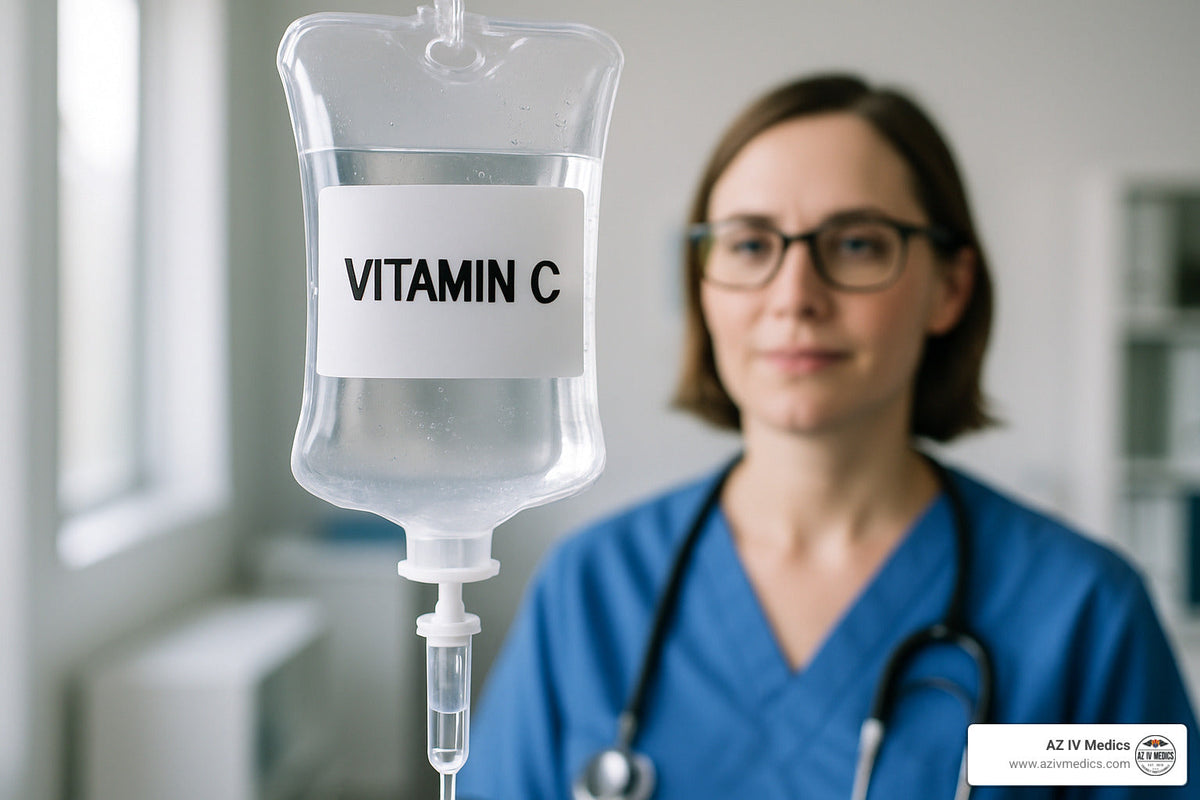
Vitamin C is familiar. You see it in fruit, supplements, skin-care products, and conversations about staying well. So when you hear about high-dose IV vitamin C, it may sound like a more powerful version of something you already know.
There is an important difference, though. Giving vitamin C through a vein can produce much higher blood concentrations than eating it or taking a tablet. That has made it an interesting area of research, but it also changes the questions about benefits, screening, and risk.
Before deciding whether an infusion makes sense, it helps to understand what the science supports and what the phrase high dose does not tell you.
What does vitamin C normally do?
Vitamin C supports collagen formation, wound healing, and normal immune function, and helps the body absorb iron from plant foods. Citrus fruit, peppers, berries, and other produce are familiar dietary sources. Severe deficiency causes scurvy.
Correcting a deficiency is a different goal from giving a large IV dose to someone who already has adequate intake. A nutrient's normal function should not be used as a shortcut to claims that more of it will improve immunity, energy, or appearance.
Why does the route make a difference?
When you take vitamin C by mouth, the digestive system and kidneys help determine the concentrations reached in the body. An IV bypasses intestinal absorption, allowing concentrations that are not achieved in the same way with ordinary oral intake.
This is why an IV study and a study of dietary supplements may address different questions. Neither automatically tells you what the other route will do. Higher blood exposure changes how the body encounters the substance; whether it leads to a useful outcome has to be demonstrated separately.
Put another way, getting more of a substance into the bloodstream is not the same endpoint as helping someone feel better, recover from a condition, or live longer.
What does high-dose IV research show?
Researchers have studied pharmacologic IV vitamin C in cancer and other medical settings. Laboratory findings and early clinical studies can help identify questions worth testing, but results are not consistently sufficient to establish routine treatment benefits.
The National Cancer Institute's evidence summary describes mixed clinical findings and notes that the FDA has not approved high-dose vitamin C as a cancer treatment. It should not replace established cancer care. Anyone receiving chemotherapy or other cancer treatment should discuss supplements and infusions with their oncology team.
Three claims that are worth separating
- Vitamin C is essential: This is an established nutritional fact. Adequate intake matters.
- Vitamin C can be studied as a treatment: Researchers can investigate high-dose administration for a specific medical problem. That does not mean every proposed use is proven.
- A wellness infusion will produce a particular result: A promise of more energy, fewer illnesses, or a visible skin change needs evidence for that specific claim, formulation, and population.
These statements are often blended together in advertising. Keeping them separate lets you be interested in the research without assuming that every appealing benefit has already been demonstrated.
Why does screening matter?
High doses can create risks that are not apparent from the word vitamin. A clinician needs to consider kidney disease or stone history, iron-overload conditions, medicines, and other treatment. G6PD deficiency is especially important because high-dose vitamin C can cause red blood cell breakdown in susceptible people.
Appropriate screening may include laboratory testing. A brief menu selection is not a substitute for assessing whether the treatment is suitable. Tell the provider about previous reactions and all supplements, not just prescription medicines.
Also mention glucose monitoring and upcoming laboratory tests. Ascorbic acid can interfere with some testing methods. The treating team needs to know what devices or tests are involved and advise on the appropriate precautions; do not change diabetes treatment based on an unexplained reading without medical guidance.
Screening is not simply a form to get through before the appointment. It is how the clinician decides whether to proceed, whether more information is needed, or whether another approach is a better fit.
What should a reasonable discussion include?
- A specific goal: What condition or finding is being addressed?
- Relevant evidence: Does the research involve the same route and patient population, or is it being extrapolated from a different setting?
- A safety plan: What screening, monitoring, and follow-up are appropriate?
- Alternatives: Would dietary changes, an oral supplement, or further evaluation be more suitable?
These questions also help distinguish a medically indicated replacement plan from an elective infusion whose benefits remain uncertain.
How to read a study mentioned in a consultation
Start with who was studied. Results from people with a particular illness may not apply to healthy adults. Next, look at what was measured: a change in a laboratory marker is different from a change in symptoms or quality of life.
Finally, ask whether the study had an appropriate comparison group and enough follow-up. Small early studies can be useful, but they usually leave questions unanswered. A responsible explanation should acknowledge those limits rather than presenting the study title as the whole answer.
What about side effects?
IV access itself can cause bruising, irritation, infection, or fluid leakage into surrounding tissue. Report pain, swelling, or other new symptoms during treatment. Trouble breathing, fainting, chest pain, or a severe reaction requires immediate assessment.
For skin-related claims specifically, our beauty IV evidence guide separates normal nutrient biology from demonstrated cosmetic outcomes. A higher dose or more frequent schedule is not a proven route to better results.
Common questions about high-dose vitamin C
Is IV vitamin C better than eating vitamin C-rich foods?
Not for the general goal of meeting everyday nutritional needs. Food and medical infusions serve different purposes. A higher concentration is not, by itself, a reason to replace a normal diet with IV treatment.
Does water-soluble mean the extra amount cannot cause harm?
No. The body handling a water-soluble nutrient does not make large amounts risk-free. Dose, route, kidney function, and individual conditions all matter.
How many treatments should someone have?
There is no universal course for general wellness. Any proposed schedule should have a clear rationale, a way to reassess the decision, and an honest discussion of what benefit is and is not established.
A useful conversation is less about finding the highest dose and more about choosing the right next step for your actual health concern.