
IV Fluids vs Drinking Water: When Does Each Make Sense?
A balanced comparison of IV fluids, drinking water, and oral electrolytes, including when mild dehydration may respond to fluids by mouth and when medical evaluation matters.

Drinking water or an oral electrolyte solution is usually the right first step for mild dehydration when you can drink and keep fluids down. IV fluids enter the bloodstream directly and may be considered after provider assessment when oral hydration is difficult, symptoms are more significant, or a mobile visit is otherwise appropriate. Severe dehydration and heat illness require urgent medical care.
“IV fluids or water?” sounds like a simple comparison, but the right answer depends on why you are dehydrated, how severe the symptoms are, and whether you can drink normally. IV hydration is not automatically better for every thirsty, tired, or overheated person.
In this hydration comparison
IV fluids vs drinking water at a glance
| Question | Drinking water or oral electrolytes | Provider-directed IV fluids |
|---|---|---|
| How fluid enters the body | Through the digestive system | Directly through a vein |
| Good starting point | Mild thirst, routine exercise, dry weather, or modest fluid loss when you can drink normally | Situations where oral fluids are difficult or a provider determines IV hydration is appropriate |
| Convenience | Inexpensive, accessible, and noninvasive | Requires a trained provider, screening, supplies, IV placement, and monitoring |
| Electrolytes | Available through food, oral rehydration solutions, and electrolyte drinks | Contained in fluids such as normal saline or Lactated Ringer's |
| Main limitations | Harder when nausea, vomiting, or illness prevents adequate intake | Costs more and carries IV-related risks, including bruising, infiltration, infection, and fluid complications |
When is drinking water enough?
For mild dehydration, begin with oral fluids, cooling, food, and rest. Small, frequent sips can be easier than drinking a large amount at once. If you have lost fluid through significant sweating, vomiting, or diarrhea, an oral electrolyte solution may help replace both water and electrolytes.
MedlinePlus dehydration guidance recommends replacing lost fluids and electrolytes and notes that mild cases may respond to water, sports drinks, or oral rehydration solutions. Severe cases may require hospital-based IV fluids.
- You are alert, able to drink, and can keep fluids down.
- Symptoms are mild and improve with rest, cooling, water, food, or electrolytes.
- You are replacing routine fluid loss from travel, exercise, dry air, or a hot day.
- You do not have emergency symptoms or a medical condition that complicates fluid intake.

When might IV fluids be considered?
IV fluids bypass the digestive tract, which can make them a practical option when oral intake is difficult. A licensed provider should still review the cause of your symptoms, medical history, medications, allergies, and basic vitals before deciding whether elective mobile IV hydration is appropriate.
Common requests include difficulty catching up after vomiting, travel, alcohol use, long outdoor days, strenuous events, or Arizona heat. These circumstances do not automatically make an IV necessary. Some clients should be directed to urgent or emergency care instead.
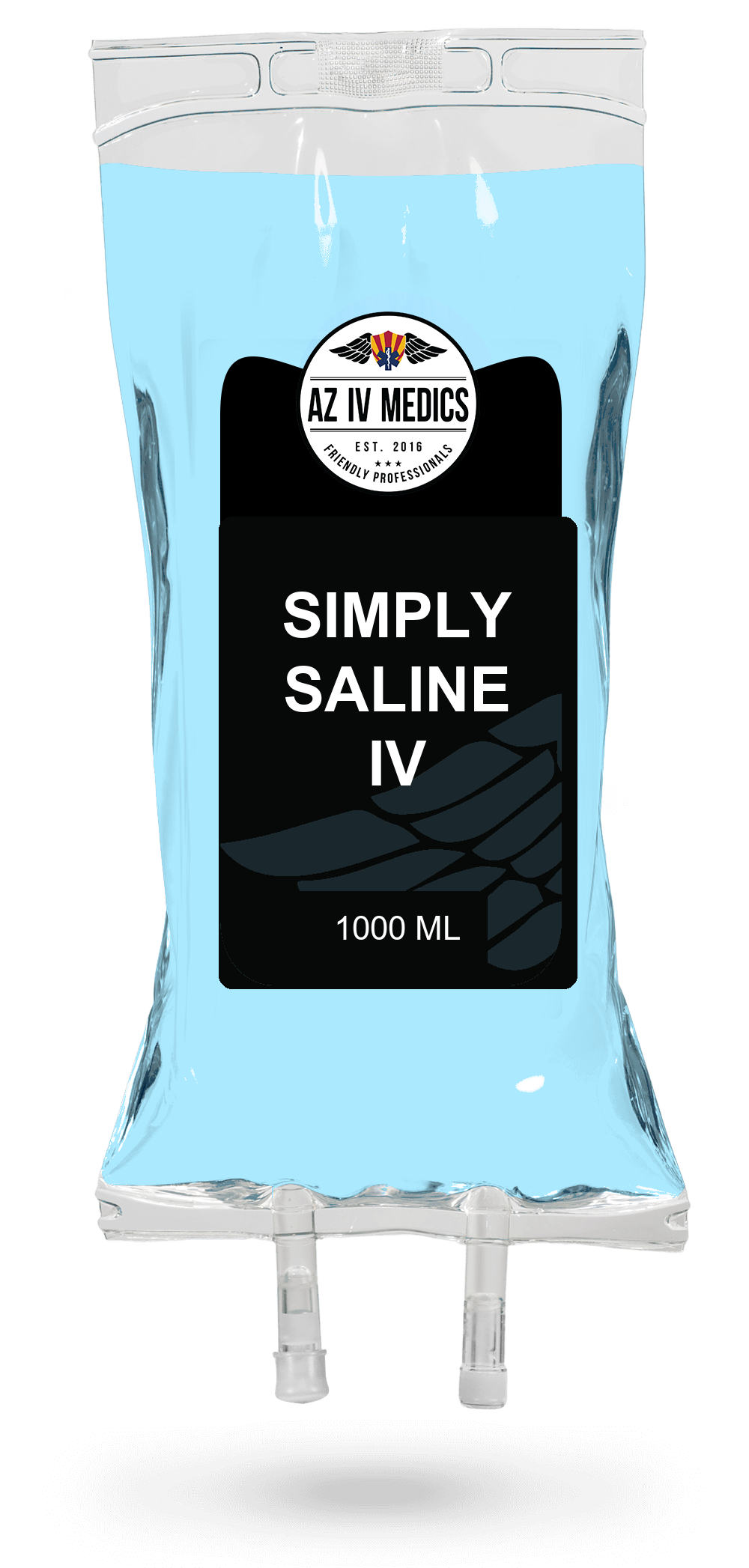
Normal saline vs Lactated Ringer's
AZ IV Medics may use 1,000 mL of normal saline or Lactated Ringer's for basic hydration. They are both isotonic IV fluids, but their electrolyte composition differs.
Normal saline
Normal saline contains sodium and chloride in sterile water. It is widely used, but the best fluid choice depends on the clinical context and provider judgment.
Lactated Ringer's
Lactated Ringer's contains sodium, chloride, potassium, calcium, and lactate. It is often described as a more balanced crystalloid. That does not mean it is the correct option for every patient or health condition.
For a deeper comparison, read Types of IV Fluids and Their Uses.
Does an IV hydrate you faster than water?
IV fluid enters the bloodstream directly, while oral fluid must move through the digestive system. That difference does not support a universal promise that elective IV therapy will make every person feel better by a specific amount or within a specific number of minutes.
How quickly you improve depends on the cause and severity of dehydration, ongoing fluid losses, kidney and heart function, medications, electrolyte balance, and whether another illness needs treatment. Claims that IV hydration is always a fixed number of times “faster” than water should be treated cautiously unless they are tied to a specific clinical study and population.
When dehydration needs urgent care
Do not wait for a mobile IV appointment if you have confusion, fainting, seizure, chest pain, trouble breathing, severe weakness, very high body temperature, minimal urination, blood in vomit or stool, repeated uncontrolled vomiting, or symptoms that are sudden, severe, or worsening. Call 911 for emergencies.
Confusion, collapse, loss of consciousness, seizure, or a very high body temperature after heat exposure may indicate heat stroke. Move to a cooler area and call 911.
Hydration planning for Arizona heat, hotels, and events
Arizona adds dry air, long drives, outdoor sports, pool days, hiking, golf, and travel schedules to the hydration equation. Plan ahead with water, electrolytes, shade, cooling breaks, food, and limits on alcohol. Mobile IV therapy should be viewed as optional provider-assessed support, not permission to ignore heat risk.
Check mobile coverage in Phoenix, Scottsdale, Tucson, Sedona, or Flagstaff. For group travel and venue planning, see mobile IV therapy for hotels, resorts, and events.
IV fluids vs water questions
Should I get an IV every time I feel dehydrated?
No. Mild dehydration commonly responds to oral fluids and electrolytes. An IV should follow provider assessment, and emergency symptoms require a higher level of care.
Can IV fluids cure the cause of dehydration?
Not necessarily. Fluids can support hydration, but vomiting, diarrhea, infection, medication effects, diabetes, heat illness, and other causes may require diagnosis or treatment beyond an IV.
Is electrolyte water better than plain water?
Electrolyte drinks can be useful after meaningful sweating or gastrointestinal fluid loss. For routine hydration and mild thirst, water and normal meals may be enough.
How much does a bag of mobile IV fluids cost?
AZ IV Medics currently lists Simply Saline at $99 mobile for 1,000 mL of normal saline or Lactated Ringer's.
Compare basic IV fluids and dehydration support, or call if you are unsure whether mobile care is appropriate.