IV Therapy Resources

Rehydration After Vomiting: The Rule of 15 and When to Get IV Fluids

Throwing up? Stop chugging water. Learn the medical "Rule of 15" for rehydration after vomiting, what to drink, and when to get an IV at home.

AZ IV Medics Editorial TeamSeptember 29, 2025Reviewed by Julie Krell Hall, MD, FACEP
Rehydration After Vomiting: The Rule of 15 and When to Get IV Fluids
Table of contents
  1. Why Plain Water Fails After Vomiting
  2. The Best (and Worst) Fluids for Rehydration
  3. When to Seek Medical Attention
  4. The AZ IV Medics Angle: Bypassing the Stomach Completely

When you have just stopped vomiting, your first instinct is usually to chug a large glass of water to clear your mouth and quench your sudden thirst. Do not do this. Gulping fluids immediately after throwing up will almost certainly trigger your gag reflex and cause you to vomit again, accelerating your dehydration.

Instead, triage nurses and emergency room doctors recommend the "Rule of 15." Wait exactly 15 minutes after your last vomiting episode, and then slowly sip 15 milliliters (about one tablespoon) of fluid every 15 minutes.

Here is why plain water is not enough to rehydrate you, what you should be drinking instead, and when it is time to bypass your stomach entirely.

Why Plain Water Fails After Vomiting

When you vomit, you are not just losing water. You are aggressively expelling gastric juices that are rich in essential electrolytes—specifically sodium, potassium, and chloride. These minerals are the electrical conductors of your body; they regulate your heartbeat, muscle function, and cellular fluid balance.

If you try to rehydrate with plain water, you dilute the few electrolytes you have left in your bloodstream. This can lead to a dangerous condition called hyponatremia (dangerously low sodium levels), which causes headaches, confusion, and muscle cramps. To actually recover, you must replace the water and the salts.

The Best (and Worst) Fluids for Rehydration

Once you are successfully keeping small sips down using the Rule of 15, you need to choose your fluids carefully. The goal is to provide your stomach with fluids that match your body's natural osmolarity so they absorb quickly without causing irritation.

What to Drink

  • Oral Rehydration Solutions (ORS): Products like Pedialyte or WHO-formulated rehydration salts are the gold standard. They contain the exact ratio of sodium, potassium, and glucose needed to pull water into your cells.
  • Clear Broths: Chicken or vegetable broth provides excellent sodium replenishment and is generally easy on a volatile stomach.
  • Diluted Apple Juice: Mix one part apple juice with one part water. This provides a small amount of glucose for energy without overwhelming your gut with sugar.
  • Ice Chips: If even a tablespoon of liquid triggers nausea, sucking on ice chips forces you to ingest water at a very slow, highly tolerable rate.

What to Avoid

  • Sugary Sports Drinks: Drinks like standard Gatorade or Powerade have too much sugar and not enough sodium for acute illness. High sugar content in the gut can actually draw water out of your body, worsening diarrhea and dehydration.
  • Dairy Products: Milk and dairy are difficult to digest and can curdle in an already acidic, highly reactive stomach.
  • Citrus Juices: Orange or grapefruit juices are highly acidic and will burn an already irritated esophageal lining.
  • Caffeine and Alcohol: Both are diuretics that will actively dehydrate you further.

When to Seek Medical Attention

Vomiting can escalate from a minor inconvenience to a medical emergency rapidly, especially in young children and older adults. You should seek professional medical care if you experience any of the following signs of severe dehydration:

  • Inability to keep any fluids down for more than 12 hours.
  • No urination for 8 hours, or urine that is very dark amber.
  • Dizziness or fainting when standing up.
  • Confusion, extreme lethargy, or sunken eyes.
  • Vomiting blood or material that looks like coffee grounds.

The AZ IV Medics Angle: Bypassing the Stomach Completely

Sometimes, the stomach is simply too inflamed to accept even the smallest sips of water. When you are stuck in a cycle of severe vomiting from the flu, food poisoning, or a migraine, trying to rehydrate orally can feel like a losing battle.

This is where at-home IV therapy changes the game.

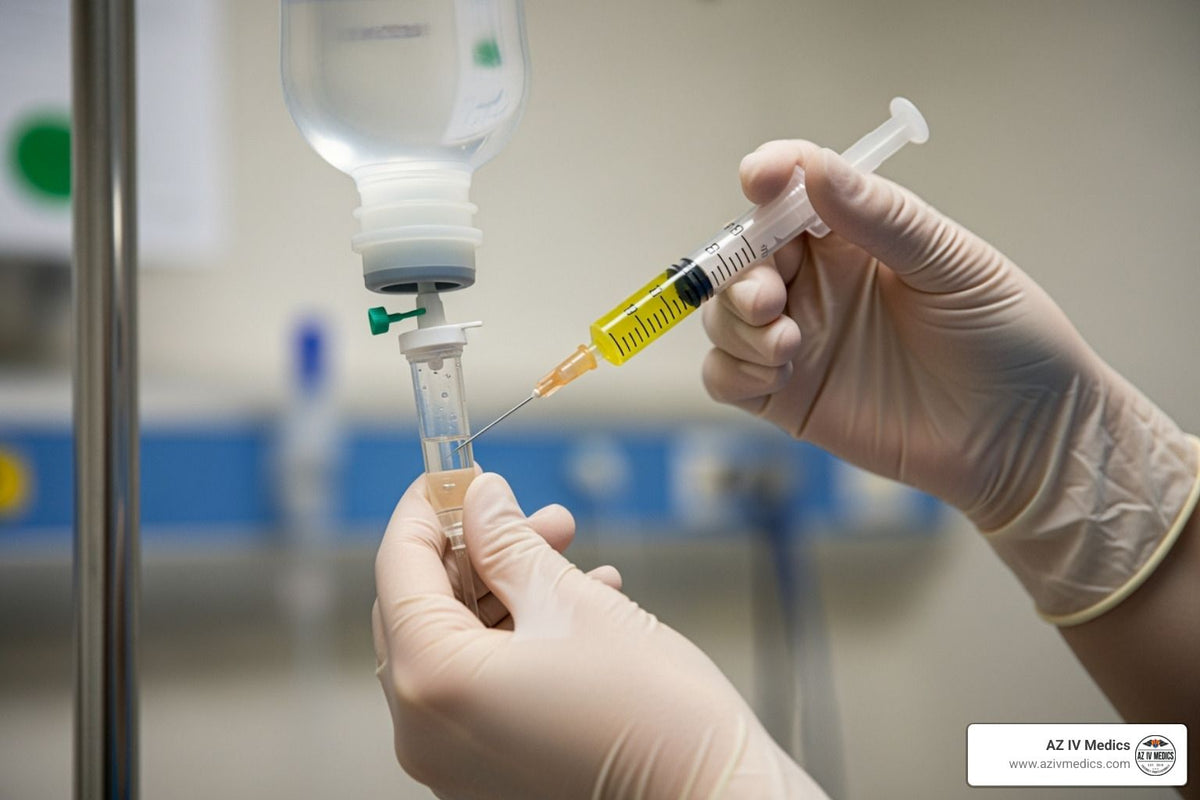
At AZ IV Medics, our registered nurses come directly to your home to administer IV fluids. An IV completely bypasses your highly irritated gastrointestinal tract, delivering a full liter of hydration and essential electrolytes directly into your bloodstream with 100% absorption. We can also add clinically proven anti-nausea medications right into the drip, stopping the vomiting reflex in its tracks so your body can finally rest and recover.

If you cannot keep fluids down, do not wait for severe dehydration to set in. Contact AZ IV Medics to get immediate, professional hydration delivered to your door.