
B12 Shots at Home: What to Know Before You Start
Starting prescribed B12 shots at home can feel unfamiliar. Get organized with practical guidance on training, labels, supplies, storage, and follow-up.
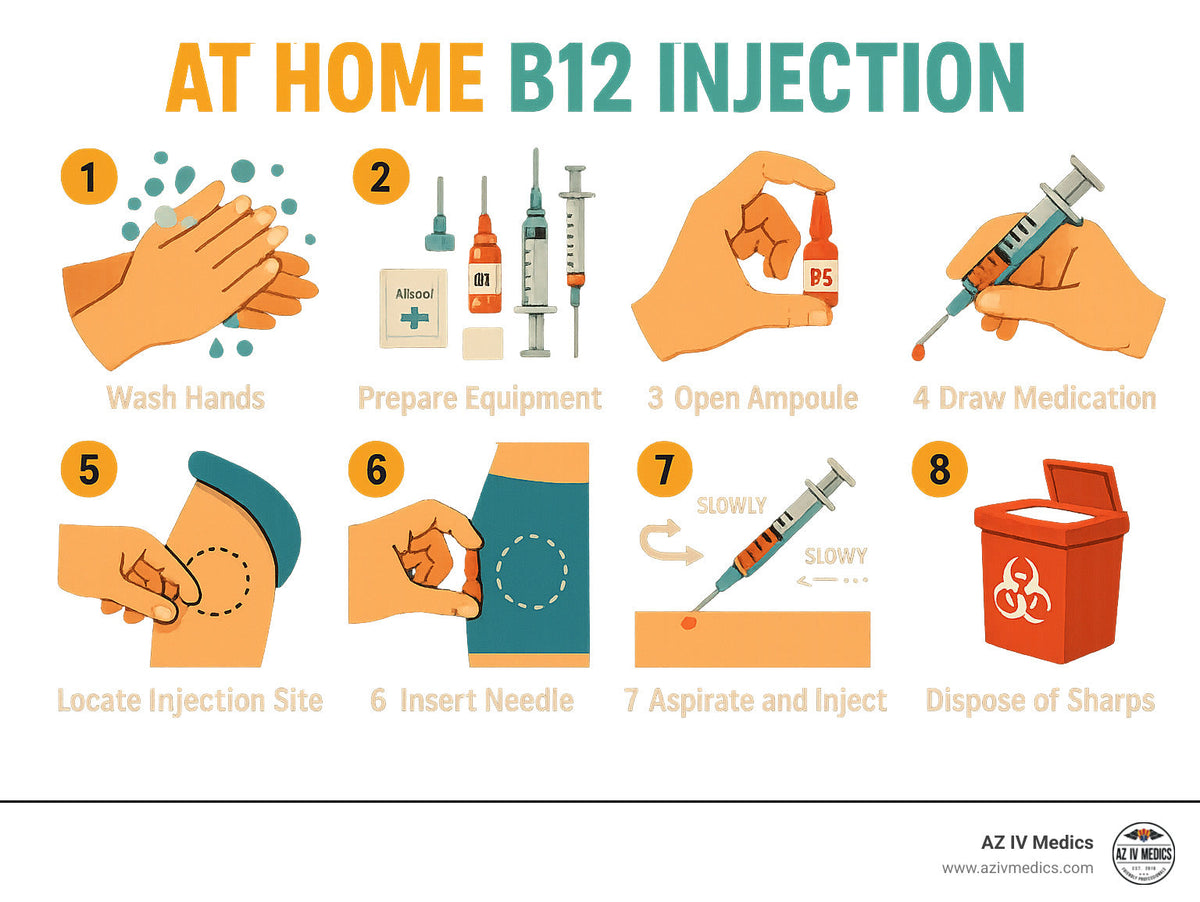
If your clinician has recommended B12 injections, the idea of giving them at home may feel convenient and a little intimidating at the same time. It is normal to have questions about the supplies, the schedule, and what to do if something does not look right.
A good home-treatment plan should answer those questions before your first dose. You should know exactly what you have been prescribed, have hands-on training, and have someone to contact when you are unsure.
This guide helps you prepare for that conversation and stay organized afterward. It is not a replacement for being shown how to use your specific medicine and supplies.
Why might B12 injections be prescribed?
Vitamin B12 deficiency can affect blood cells and nerves. Treatment depends on its cause, symptoms, and absorption. Tablets are appropriate for some people; injections may be recommended for others. Some conditions need long-term treatment even after symptoms improve.
A prescription for injections is different from a general promise of extra energy. If tiredness is the concern, finding its cause remains important. Our B-complex versus B12 comparison explains why adding more vitamins is not always the answer.
Is home treatment the right fit?
Convenience is only part of the decision. You need to be comfortable following the instructions, handling the supplies, and keeping the schedule straight. If vision, hand control, needle anxiety, or another concern makes that difficult, tell your care team. A supervised visit or a trained caregiver may be a better arrangement.
Ask to practice the process with the person teaching you and explain it back in your own words. This is not a test; it is a way to catch unclear instructions before you are at home with a question and no one beside you.
What should be settled before the first home dose?
- The exact prescription: Know the medicine name, concentration, prescribed amount, route, and timing. Products and instructions are not automatically interchangeable.
- Practical training: Have a qualified professional demonstrate the technique and watch you demonstrate it back. A written guide should reinforce that training, not replace it.
- Supplies and disposal: Confirm the correct supplies and have a suitable sharps container ready before starting.
- A contact plan: Know whom to call about a missed dose, damaged vial, uncertain measurement, or reaction.
Read the prescription and the vial together
The amount of medicine in a vial is not necessarily the amount prescribed for one injection. Likewise, the concentration on the label and the volume used for a dose describe different things. Have your pharmacist or clinician show you how the written directions match the supplied product and syringe.
If a refill looks different, check before using it. A changed brand, concentration, or type of supply is a reason to confirm the instructions, not to assume that the same appearance or measurement applies.
Ask whether the vial is single-dose or multi-dose. CDC guidance states that leftover contents of a single-dose vial should not be saved for a later injection, even for the same person. Multi-dose products have their own handling and discard instructions. The label and your dispensing team's directions matter more than how much liquid appears to remain.
Storage, preparation, and infection prevention
Follow the dispensing label for storage and expiration. Do not assume that every product must be refrigerated or that an opened vial can be used indefinitely. Ask the pharmacist about the allowed use period after opening and what changes in appearance mean.
Use the clean workspace and hand-hygiene method taught by your care team. Never share supplies or reuse needles or syringes. If a seal is damaged, the contents look unexpected, or you are unsure whether a supply remained sterile, stop and ask for advice.
Set up a routine that gives you time and good lighting. Keep the instructions with the supplies, check that you have everything before starting, and avoid interruptions. If you lose track of a step, do not guess your way through it.
For travel, ask the pharmacist about storage limits and how to carry your medicine and sharps supplies. A hot car or an improvised cooling arrangement may not meet the product's requirements. Planning ahead is easier than deciding whether a vial is still usable afterward.
Dispose of sharps immediately
Place used needles and syringes directly into an appropriate sharps container. Do not put loose sharps into household rubbish or recycling. Keep the container away from children and pets and follow local disposal rules. FDA-cleared sharps containers are designed to resist punctures and leaks.
What reactions need attention?
Tell your prescriber about a cobalt or vitamin B12 allergy before treatment. Seek emergency help for trouble breathing, facial or throat swelling, fainting, or another severe reaction. Contact your clinician about worsening redness, warmth, swelling, or persistent pain at the injection site.
Do not double a dose to make up for one you missed without instructions. If numbness, balance problems, or other symptoms persist or worsen, contact the treating team rather than increasing the amount yourself.
A simple way to keep track
A paper calendar or phone note can be enough. Record the date you took a prescribed dose and any questions or symptoms you want to discuss. Keep the current written schedule in one place, especially if it changes after the initial treatment period.
For example, if you cannot remember whether you already took a dose, a completed log is more useful than trying to judge by the amount left in the vial. If the record is unclear, call for instructions rather than taking an extra dose just in case.
Keep the follow-up appointment
Improvement, laboratory results, and the cause of deficiency guide the ongoing plan. Ask when treatment will be reviewed and what would change the schedule. A brief dose log can help you and your clinician identify missed doses or patterns in symptoms.
Can I switch to tablets later?
Possibly, depending on why B12 was low and the treatment response. Some people need ongoing injections, while others may have an oral option. Ask at follow-up rather than switching routes on your own once you feel better.
What if I am still nervous after training?
Tell the care team. Another demonstration, written instructions in a clearer format, or a supervised appointment can help you decide whether home treatment is workable. Being comfortable asking for help is part of a reliable plan.
The goal is not to become an injection expert. It is to have a prescribed routine you understand, can follow consistently, and know how to pause when something is uncertain.