
Banana Bags and Electrolytes: Ingredients, Uses, and Limits
A medically cautious guide to banana bags and electrolytes: ingredients, uses, and limits, including evidence limits, risks, provider assessment, and warning
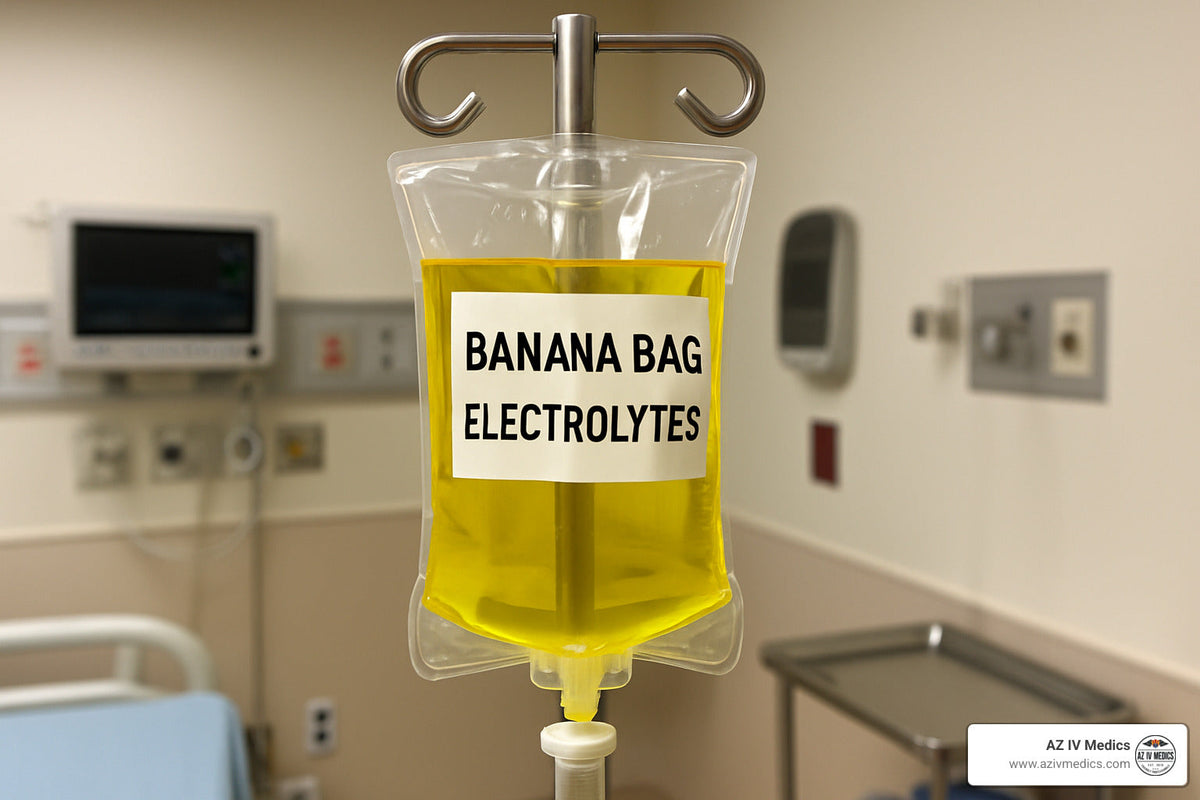
Banana Bags and Electrolytes: Ingredients, Uses, and Limits is a topic that is often described online with stronger promises than the evidence supports. This revision keeps the practical search question while separating established information from marketing claims.
What the evidence supports
Mild dehydration often improves with oral fluids and, when appropriate, an oral rehydration solution. IV fluids may be used when oral intake is not practical or when a clinician identifies a medical reason, but an IV does not diagnose or treat the underlying cause of fluid loss.
What to consider
- Start with oral fluids when symptoms are mild and you can tolerate oral fluids.
- Fluid type, volume, and rate should reflect health history, symptoms, medications, vital signs, and examination findings.
- Kidney disease, heart failure, pregnancy, abnormal vital signs, or ongoing vomiting can change the most appropriate plan.
Where provider-assessed IV care may fit
A licensed clinician can review symptoms, health history, medications, allergies, vital signs, pregnancy status when relevant, and the ability to drink fluids. The clinician may recommend oral hydration, primary care, urgent care, emergency care, or another option instead of an IV. Prescription medications and add-ins are never automatic.
If IV care is considered, the provider determines the appropriate fluid or ingredient, amount, rate, monitoring, and whether treatment should proceed. Individual experiences vary, and no specific result is guaranteed.
Risks and limitations
Possible IV-related risks include pain, bruising, bleeding, infiltration, phlebitis, infection, fluid overload, electrolyte disturbance, medication or ingredient reactions, and failure to identify a condition that needs a different level of care. Evidence for elective vitamin and wellness infusions varies substantially by ingredient and intended use.
When to seek urgent care
Seek urgent or emergency care for confusion, fainting, inability to keep fluids down, very little urine, severe weakness, severe abdominal pain, blood in vomit or stool, high fever, or suspected heat stroke.